The blog of EagleSoft Ltd!
At EagleSoft Labs, I post about the development of my various retro homebrew and video game mods, Indie video game projects, software, and electronics. I also review software, and post about other geeky/nerdy stuff.
After about 4 months of semi-sporadic development, a v0.1 Demo release of "Socket the Hedgeduck", (a ROM modification that is an unofficial port of Socket/Time Dominator
assets (music, level layouts, art, objects, and more) to the Sonic the
Hedgehog Engine) has been released! You can learn more about the modification, as well as download an IPS patch (with instructions), at the project page.
For demo release v0.1, the following levels are implemented:
TrCZ 1-3
OCZ 1-3 (and "4"/HSZ3)
BZL 1-3
BZF 1-2
BZC 1-3
BZLa 1-3
Level Select is enabled by default, due to the first zone not yet worked on yet. Music to be improved with better ports in the next demo release.
Behind the scenes, a lot of work has gone into Socket the Hedgeduck since the blog announcement of the project and since the previous progress post. Most of these changes were adding additional SMPS conversions of video game songs, improving collision for TrCZ, DPCM compressing all DAC samples for the MegaPCM sound driver, various bug fixes, and other technical stuff. Most importantly, I've recently finished the Bonus Zone Lava (BZLa) acts, finally added a BG layer and palette cycling to OCZ, and added all of the zones to a 3-page level select. In the BZLa acts, you must hit the springs and invisible path swapper objects to traverse to the top of the sprial staircase, before the deadly lava-water rises and defeats you!
Videos and pics below
With BZLa created, all that is left is to fix a few big bug,
and a Demo #1 release of Socket the Hedgeduck should be released VERY soon!
Although last year was a very productive year for EagleSoft Ltd, to the casual passerby to EagleSoft social media, it would appear that our development on software is going slow this beginning of the new 2016 year. However, nothing could be further from the truth; there is usually something going on behind the scenes at the software engineering laboratory!
Colonial Combat progress:
Although I graduated from the university in December, work on Colonial Combat is still ongoing. The fighting engine is mostly finalized and coded, and I'm patiently waiting on the pixel artist to finish drawing up the remaining levels and more character art so that I can import the level art, design the levels, rig the other characters, and code in other level objects and gimmicks as necessary for the object handler script. (Drawing both art pieces for the artist are very time consuming, due to the art being original pixel art. Fun fact: each character has 115 sprite frames. 115 sprite frames * 13 characters = 1,495 total sprite frames for all characters. That's a lot of sprites for our artist to draw!)
NEW Project "Socket the Hedgeduck":
In the meantime while waiting for the art to be created for Colonial Combat, I privately began work in December 2015 on a new side-project for fun and as a programming challenge: "Socket the Hedgeduck"! It's a modification (or in technical terms for the retro-technically inclined, a "ROM hack") of Sonic the Hedgehog (16-bit), which is an advanced hack which serves to be an unofficial port of Socket/Time Dominator assets (music, level layouts, art, objects, and more) to the
Sonic the Hedgehog Engine. It's my first Genesis game modification since 2012, when I went on hiatus from game modification in order to focus on my university studies. It feels great again to be tinkering around with Genesis hardware, the Sonic the Hedgehog engine, and with Motorola 68k assembly programming, especially now having more formal knowledge on computer internals via a Computer Architecture class. Full details about the hack (including pictures and videos) available at the project page. Development is going full-steam ahead on this side project, and I hope to have a demo build sometime soon in Spring (released via a patch file, no concrete date on this).
As mentioned in a previous post last year, we created a new mobile app called "The Equator" which was a PoC app project for a graded Distributed Systems university project. The app fetched engineering equations, their names, and picture links of the equations from an online database. It was a very difficult to develop app, due to the original source code (an unfinished project from a another team) originally being written within the restrictions of MIT App Inventor 2. Although the project was completed for the DS Class, it was quite hackly-built, having to cache the online database via an ugly, offline pseudo-database of key-value pairs in order to store the database.
Unfortunately, the online "database" (which was actually a list of TinyWebDB list of tag-value pairs online) was hosted by Google Cloud Compute. This service is free to new users for a certain trial period, and then requires a subscription fee to use afterwards. Due to this app just being a PoC (and not being a very well written app, due to the restrictions of MIT App Inventor), and having to require a subscription fee to continue hosting the database, we are choosing not to continue this project further. Google deletes databases for those who wish not to pursue hosting a database after the trial period. The source code archive (which is meant for educational purposes) on The Equator page will be updated within the next few days with instructions and the software to replicate the server elsewhere, as well as the database contents.
As mentioned in the 2015 end-of-year post, my/EagleSoft Ltd's main development laptop, the HP ProBook 4540s, sadly died, due to boot issues. I tried everything to fix the boot issues, but was unable to find a solution. This was saddening, because I purchased that laptop in Fall 2012 essentially for free, by using half of a one-time $1000 scholarship I earned at the community college, and because I loved the hardware dearly. Not only that, but also it died during September 2015, in the middle of my final semester at Robert Morris University and while working on a major, graded video game project, Colonial Combat. Luckily, the project was not lost (it was backed up elsewhere), and a professor was kind enough to loan me out a university laptop for the project. He extended the rental until the end of March 2016, until I could afford a new, permanent laptop, and another friend loaned me out a SATA2USB device to restore the data from the old HDD to the new laptop.
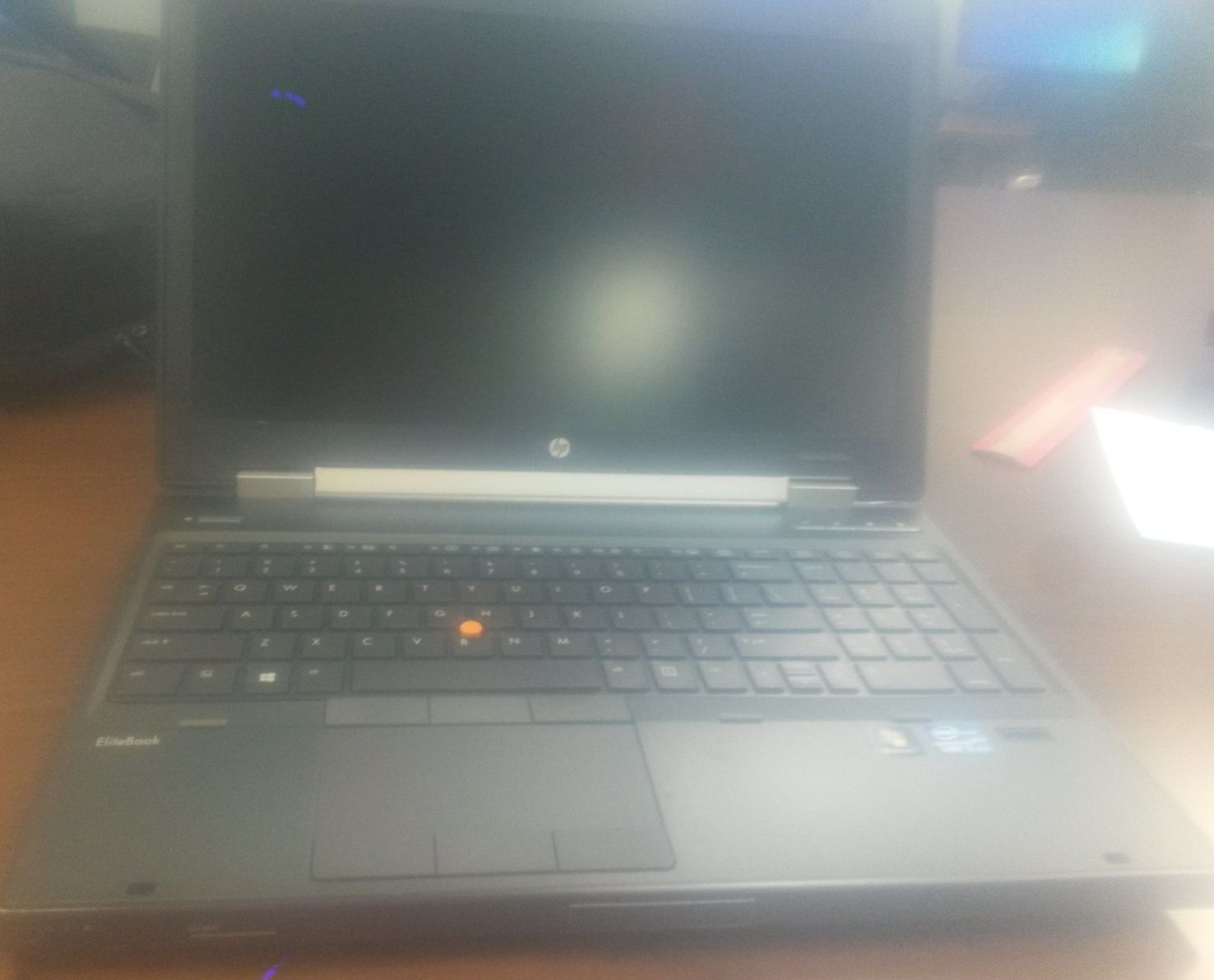
During mid-February 2016, with time running out on the rental period and finally earning enough money, I finally decided to purchase a laptop. What did I purchase, why, where, and how much? Introducing EagleSoft Ltd's new dev/gaming machine... the Elitebook 8570w!
Althoughthe HP Elitebook 8570wis a slightly older, 2011 model of laptop, don't be fooled; it is a very powerfulmachine. Technically, it is a classified as a "mobile workstation" type of laptop, meaning it has the specs of a dedicated desktop workstation computer, but in a slightly bulkier laptop form.This product line of HP laptop is a corporate product line of laptops meant for computationally and graphically intensive work for power users, especially for digital content creation and for CAD work. My particular model has the following specs. Items marked with "*" I recently upgraded, while items in bold are hot features:
Intel Core i7-3720QM Processor (Quad-core, 2.60GHz up to 3.4 GHz with Intel Turbo Boost)
Intel VT-x and VT-d (for HAV)
Windows 7 x64 Pro (because Windows 8 and 10 suck)
x4 RAM DIMM Slots, up to 32GB
*Came with 8GB installed, I upgraded it to 16GB of RAM
320 GB HDD
Military-strength aluminum laptop chasis
Graphics
15.6" LED Backlit monitor, with max resolution up to 1920x1080, with lit HP logo on back
VGA Out
DisplayPort Out
Has a NVidia Quadro K2000M dedicated graphics card
Full-size backlit keyboard
Normal keyboard layout
Numpad
Has drain hole, for spill/dust resistance
x4 actions buttons
WiFi
Mute
Internet browser
Calculator
Mouse
Large trackpad
Pointing stick
x2 sets of 3 mouse buttons (left, right, middle for mouse wheel/special, for both trackpad and pointing stick)
Fingerprint Scanner
x5 USB Ports
x2 USB 3.0 Ports
x2 USB 2.0 Ports
x1 USB 2.0/SATA combo port
x1 1394a Firewire port
Audio
Headphone jack
Microphone jack
Built-in speakers
Has Stereo Mix
SD/MMC slot
Connectivity
Gigabit Ethernet port
56k Modem port
WiFi
Built-in Bluetooth 4.0
Upgrade Bay in Optical Disk Drive Slot
Came with SATA Caddy to utilize a 2nd HDD
*I installed a BD-ROM/DVD Super Multi drive instead
SmartCard Slot
ExpressCard/54 slot
*Bought an HP Analog TV Tuner card, for capturing RCA AV
Docking Bay slot
Can connect legacy serial/parallel ports through a dock, other peripherals
BIOS
Has settings to toggle the port settings for serial/parallel ports for compatibility
The new laptop runs very smoothly, has awesome graphics, and has specs even better than the old HP ProBook 4540s. Specifically, I bought this laptop for gaming, video game development (especially CAD and programming), and digital content creation, due to the very fast processor speed, high amount of RAM, BD-ROM upgrade drive; CAD-certified, powerful dedicated graphics card; and legacy hardware support (serial/parallel port support, ExpressCard/54, and 56k modem port). The legacy hardware will be used in the future for embedded development for programming some older Microcontrollers and Microprocessors, while the ExpressCard port will be used for the analog TV Tuner card, for capturing play-throughs of video games on my older consoles (for the upcoming Nerdology YouTube channel). Back in 2011, this laptop sold for ~$1000 MSRP, but I found it on eBay refurbished for $300. Overall it has been a great deal of a purchase so far!
Pics/vids of the laptop:
Test capture of RCA video via the HP Analog TV Tuner ExpressCard
(Super Mario Bros. from a Famiclone console)
Video review of HP Elitebook 8570w
(Please excuse AV quality)
Stay tuned for more EagleSoft Ltd developments (with the new hardware)!
On February 25, 2015, EagleSoft Ltd moved its old Google Sites website to its present-day custom domain (www.eaglesoftltd.com. Recently, we also moved the EagleSoft Ltd blog (EagleSoft Labs) from its old domain to a custom, sub-domain (blog.eaglesoftltd.com). The purchase of the domain was for a year; therefore, it will expire on February 25, 2016 (in a few days). The domain has been renewed for this 2016 year, meaning another fun year of both old and new content!
Let'sadmit it, retro video game consoles and accessories are old; however, that doesn't make them not interesting from an electronics and software engineering standpoint! Although some retro video game consoles and accessories can be reproduced in newer forms for the fanboy (such as clone consoles and new video game controllers from aftermarket companies such as retro-bit), nothing beats the 100% compatibility and authenticity of original hardware and accessories. It is important to preserve the old hardware, reverse engineer and document the secrets and specs of the hardware for homebrew development and emulation, digitally backup the games for future generations to enjoy, and to take care of the hardware. Because once it is gone, it's gone.
Although not hard to reproduce or to find new ones being produced, today we will be discussing how to repair and maintain your 1st-party Sega Genesis 3-button controller. This guide should carry over to 1st-party 6-button controllers, as well as for 3rd-party controllers with some variation. After playing on my ol' Genny with some friends a few weeks ago, I found some of the buttons on my pre-owned controllers I bought at the retro video game shop were becoming very unresponsive, if responsive at all, so I Googled how to fix the issues. It's a lot better to repair the hardware then to spend a few hard-earned dollars on new hardware, especially if on a budget!
The most common problem with Sega controllers are the button contacts. These button contacts are similar in style to cheap calculator contacts or to microwave buttons. For the buttons on both of those devices, the button assembly consists of 5 main components:
The physical button itself (usually with a label of what it does)
The button contact (underneath the button itself)
The PCB board with the electronics circuity
The PCB contact
Physical mechanism to retract the button to normally-opened position
By pressing the physical button (component #1), the button contact (component #2) makes physical and electrical contact with the PCB board and the PCB contact (components #3 and #4). The physical mechanism (component #5, usually component #2 the rubber button contact) brings the button back to its normally-opened state after being pressed and released. The PCB contact is usually a yellow circle with electrical breaks in it. By pressing the button, the button contact (a black circle which has some type of electrically conductive material on it) closes the circuit at the yellow PCB contact, allowing the circuit on the controller and in the console to register a button press for an action in the game's code to occur. The problem with most pre-owned, 2nd-hand Genesis controllers is the dirtiness inside the controller, on those button contacts, and on the PCB contact. Depending on where and how the controller is stored, and after repeated button presses over the years, dirt can build up on those components, and reduce the button's ability to initiate electrical contact.
To fix these issues, you will need to open up the controller and remove the dirt from components #2-4 above using rubbing alcohol. You will need the following
Appropriate sized Phillips screwdriver for the controller screws
Replacement screws (optional)
Dixie cup
Bottle of Rubbing alcohol (50%-70% strength recommended)
Q-Tips or Cotton swabs
Genesis game or Flashcart
Remove the 6 screws from the bottom of the controller. Keep them handy. Optionally, if they are stripped, rusted, or in bad mechanical condition (like mine were), replace them with similar screws. Separate both halves of the controller
Remove the screws holding the PCB to the controller. Replace if necessary and keep them handy. Carefully detach the PCB's DB9 wire from its notch on the top to remove the PCB.
Push out the button assemblies and D-Pad assembly from the front of the controller. The D-Pad has a rubber mechanism which should also be removed. Remove the rubber button contacts from the switches, but remember which buttons they goto.
Pour some rubbing alcohol solution into your Dixie cup.
Using either your Q-tips or a cotton swap (I prefer a cotton swap), gently wet it with rubbing alcohol and rub it into the PCB contacts on the PCB. Dirt will be lifted onto the Q-tip/cotton swap. Repeat until clean and shiny. Use a dry Q-tip/cotton swab to soak up the leftover Q-tip solution on the PCB and wipe clean. Do the same for the black conductive material on the button contacts underneath the physical buttons, and for the rubber physical mechanism for the D-pad.
Using the Q-tip/cotton swaps, clean up the insides of the controllers (mine were pretty dirty from the previous owner).
Reassemble everything
Lastly, plug the controller into your Sega Genesis, and play a game which utilizes all of the buttons. If you are awesome and already have a flashcart (such as the Everdrive MD), I strongly recommend looking for a ROM titled "Multitap - IO Sample Program (U) (Nov 28 1992)" "somewhere" on the interwebs. (El Google is your friend *wink*). This particular Sega program will diagnose controllers by showing button presses for 3-button and 6-button controllers, button presses and coordinates for the Mega/Sega Mouse, and various other Genesis peripherals.
If you followed this guide (and did not break anything), your controllers should now be much more responsive in trigger button presses, making for a better gaming experience. Mine were quite unresponsive (some button were not even triggering), and this trick worked like a charm. If not, then there could be other issues with your controller (electrical shorts, loose solder joints, worn out rubber pieces for the buttons etc), which you should diagnose and repair/replace.
On 02/25/15, EagleSoft Ltd moved its old Google Sites website to its permanent home with a custom domain. Although we originally wanted to also move this blog (formerly hosted at www.eaglesoftlabs.blogspot.com) as a subdomain ("blog") under the domain, we had technical difficulties in doing this, and due to last year's monumental amount of development work, this task was backlogged. While configuring the domain settings today (due to an upcoming renewal/one-year-anniversary the domain for this new 2016 year next month), we tried the steps again, and finally got the subdomain setup!
So we are proud to introduce the new blog domain...
The year2015 A.D. for EagleSoft Ltd was a great year! In approximate order, the following is the key events for EagleSoft Ltd in the past year.
Unfortunately, due to bottlenecks and technical difficulties with the
BASIC BEX compiler for Sega, the Ultra Air Hockey Sega/Retro port was
moved from BEX to SGDK in Jan 20; this project is still ongoing, but the progress for the SGDK attempt is nearly caught up with the old BEX attempt. EagleSoft Ltd successfully finished and published to the EagleSoft Ltd website its first Unity3D video game, both a v1.0 and v1.1 version of Ultra Air Hockey DX around Jan/Feb 2015, and most importantly, purchased a Google Play License and published a Android port to the Google Play Store around summer 2015. This project was a group project started with a colleague for a Fall 2014 Fundamentals of Software Engineering college class. We also officially purchased and setup a domain for the website (formerly a stock Google Sites one) to www.eaglesoftltd.com on 02/25/2015. During March-April 2015, we published 0xdbin, a computer architecture number utility for a graded class project. Furthermore, key to retro development for the Sega Genesis/CD/32x, funded with a large refund check from my shrewd Uncle Sam, I purchased an EverDrive MD for my birthday, a flashcart that would allow me to test my homebrew projects and hacks On Real Hardware (TM), for debugging discrepancies and issues for the projects between emulators and Real Hardware. The purchase of this EverDrive MD finally finished a quest started in 2011 to assemble the ultimate, retro Sega gaming machine: a Sega Genesis CD 32x with EverDrive MD (and backwards compatible with Mark III SMS games, and some hacked Game Gear games converted to SMS format).
During Summer 2015, we began work on a second Unity3D video game called StarEagle; however, it has been put on hold currently. Around late Summer 2015 to early Fall 2015, EagleSoft Ltd expanded its social networking presence to a FaceBook Group. During Fall 2015, as part of a graded IED project for college, I began work on finishing a colleague's Unity3D video game idea called Colonial Combat, with a newer project group. The project received an A. This project is currently ongoing now in our own leisure time outside of class. However, on 09/19/15, EagleSoft Ltd's primary development machine, the beloved HP ProBook 4540s, died; may she rest in piece. This laptop I received more or less for free, due to earning a one-time $1000 scholarship at the community college for usage on school supplies, and I greatly miss her. Currently, I am using a loaned laptop from the university for development and primary computing, but its rental is due on 01/15/16. At the same time of the development of Colonial Combat, I worked on finishing an old Fundamentals of Software Engineering Android app called The Equator from another project group for Distributed Systems class, by putting in internet database connectivity. This application was yet the hardest project I ever worked on, due to the old project using MIT App Inventor 2, and having to write very convoluted code to fetch the online database's data and cache it locally onto the device with a hackish local database.
Finally, the year ended with a long-awaited release of Demo #3 of Sonic CD Breakout for SAGE (Sonic Amateur Games Expo) 2015; however, SAGE 2015 has been postponed until later in early 2016. I also finally earned my B.S. Software Engineering degree! Overall, EagleSoft Ltd accomplished much more than expected in the past year, and we plan on doing a lot more next year!
EagleSoft Ltd accomplished creating plenty of software over the past year and in getting its online presence established. Of the highest priority right now, however, is generating funds for a new laptop and getting a job in my field! This current laptop is a rental from the university, which is due on 01/15/16. The important data from this rental and the dead one must be transferred to a permanent home in a new laptop, and time is of the essence. I already have a laptop picked out, but need to find way to fund acquiring this capital in time, due to lack of funds due to college costs last year.
As for software engineering projects, in 2016, we at EagleSoft Ltd will continue to work on Colonial Combat and Ultra Air Hockey Retro development, both which currently have the highest priority in terms of software development. We may also get back into retro video game modifications (there is a project in the works, TBA, if the project is feasible) too. After those 3 projects, work on StarEagle will resume.
As for other plans, EagleSoft Ltd is also considering creating live YouTube videos for video game reviews, electronics, and other nerdy stuff. Details TBA in the near future. For the future, we are also looking into homebrew developement for Dreamcast and the Atari XE(GS) consoles, as well as perhaps more Sega homebrew. (We do not have a Dreamcast yet, nor any means to run code on either console On Real Hardware. Also, research needs to be done on how to program both using high-level tools.)
Bad news :(! The Sonic the Hedgehog fans who were going to host SAGE (Sonic Amateur Games Expo) for 2015 have decided to postpone the event from Dec 2015 until Spring 2016 now. Full details about this delay (and why) can be found at Sonic Retro's post. EagleSoft Ltd submitted a Demo #3 release of Sonic CD Breakout to the event, and was planning on submitting a first demo build of Colonial Combat to the event.
The good news is that, if the fans running the event allow an extended submission deadline, this gives us a chance to receive and implement feedback and bugfixes from those who have played the Demo #3 release, to incorporate into a v3.1 release to submit into the now-postponed SAGE event in Spring 2016. It also definitely gives us time to add more levels, FMVs, and improved code to Colonial Combat for the event.
We will keep the EagleSoft fans/blog readers informed about the extended SAGE date (and SCD Breakout/CC development) as it occurs :)
Good news! Although EagleSoft Ltd mostly does not like mobile app development for "smart" devices (because we're too cool and old-school for hipster new school), for what few apps for smart devices we may make, we now have a NEW Mobile Section on the website! Check it out; we have a new app for a graded project (mostly as a PoC) for an equations database called "The Equator", and have added a link in that section down to our famous mobile port of UAHDX!
Ho ho ho! Finally! It's here, DEMO #3 of Sonic CD Breakout, just in time for Christmas 2015 and SAGE 2015!
This
demo has been in the works for 2 years (since 2013), and is finally
ready for a release! To summarize the changes, bugs were squashed, two
new zones were created (Desert Dazzle Zone and Quartz Quadrant Zone), 3
special stages were created, and time zone based backgrounds and borders
were created for all levels. What is Sonic CD Breakout? It's a Sonic
fan game, which is a Sonic CD themed breakout clone, using the BreakGOLD game engine as a total-conversion. For more information about the fan game project, see this page. The latest demo can always be downloaded from that page. READ the readme in order to learn how to install the game, because some "assembly" is required.
This demo #3 is planned to be released for SAGE (Sonic Amateur Games Expo) 2015 Act :)! Will created a post announcing when it has been submitted and hosted at the expo
During the week of 09/20/15-09/26/15, I cleanup up the site and add a few pending items. I converted the leftover, hard-coded URL links to soft-links that will update as pages/content is moved around with our web host provider tools. Most importantly, I added a few pending items, including an update to the music page, now including YM2612 Genesis tunes and YM3812/YMF262 tunes for OPL2/OPL, an unofficial WIP music pack release of the YM2612 and OPL2/3 tunes for StarEagle (with VGM Play) and an official updated release of the YM2612 tunes for Ultra Air Hockey (Retro). Also updated is the main page with the internship project and an addition of an EET page for electronics and a page for Microsoft Office Macros.
Enjoy the new updates and content, and stay tuned for more EagleSoft Ltd development!